Secondary Packaging · Shrink Wrapping
Automatic Shrink Wrapping Machine (Sleeve Sealing Machine)
Conveying, feeding, sealing, cutting and shrinking in one continuous line - built for cases, boxes, bottle and can multipacks and trays that need a tight, tamper-evident wrap.
Fully automatic line
Integrated shrink tunnel
Installed and serviced in Malaysia
Automatic Shrink Wrapping MachineFull specs
Overview
Shrink Wrapping Machine
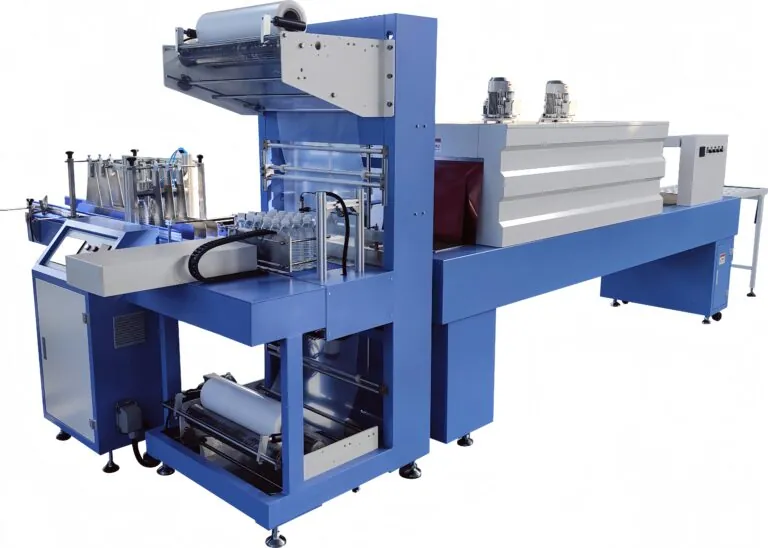
An automatic shrink wrapper is a fully automated production line that integrates conveying, feeding, sealing, cutting, and shrinking into one continuous process. It is especially suitable for large, single-counted cases, boxes, bottles, or trays that require strong protective packaging.
When wrapped with PE or PVC shrink film, the machine produces a tight and secure shrink package, keeping products stable and well-protected during transportation. The conveyor system can be designed with rollers or mesh belt, depending on production requirements, and customized layouts can be provided to suit specific customer needs.
Working as a sleeve sealing machine, it wraps the film around the product and seals it before the pack enters the shrink tunnel, producing neat, compact packs that hold up through long-distance handling and storage.
How it works
How the Automatic Sleeve Sealer and Shrink Tunnel Work Together
An automatic sleeve sealer and a shrink tunnel are two halves of one process. The sealer wraps the film and makes the seal; the tunnel shrinks the film tight. On our line the sequence runs without an operator touching the pack:
1
Alignment
The infeed conveyor lines the products up, and a 90-degree infeed uses a cylinder and a sensor to position them accurately.
2
Film wrapping
PE shrink film is wrapped around the grouped products.
3
Sealing and cutting
A holding plate keeps the products still while the sealing blade seals and cuts the film. An air flush then cools the sealing area quickly so the seam sets strong.
4
Outfeed
The sealed pack moves on to the outfeed conveyor.
In a sleeve wrap, the film usually runs around the pack with its two sides left open. After the tunnel, the film tightens around the products and the open sides draw back into neat round openings. That is why sleeve sealing suits multipacks of cans, bottles and cartons, where the film's job is to hold the group together rather than to seal each item from the air. The whole line runs on a Mitsubishi PLC.
Features
What sets it apart
Full datasheet on request.
Highlights
Suitable for round-shaped products such as cans, tins, bottles, Tetra Pak, etc., including non-tray items.
Machine combines sealing and shrinking functions for a complete package.
Infeed conveyor automatically aligns products for packaging.
90° infeed uses a cylinder and sensor for accurate product positioning.
Packaging process: product alignment → film wrapping → sealing & cutting → outfeed conveyor → shrink tunnel → package completed.
Conveyor includes guiding plates on both sides for product entry.
Product is held in place by a plate during sealing and cutting to prevent movement.
Air flush system cools the sealing area quickly for stronger seams.
Equipped with a product entry sensor for a smooth packaging process.
Uses Mitsubishi PLC controller for stable operation performance.
Applications
What it wraps
Beverages and cans
Wraps bottles and canned drinks into stable shrink bundles.
Box and tray grouping
Combines multiple cartons into one wrapped pack.
Household goods
Packages detergents, cleaners, and large bottles securely.
Industrial items
Protects hardware and bulky components with shrink film.
Transport protection
Creates tight bundles that stay secure during shipping.
Guide
Choosing a Sealing Machine for Shrink Packs: Sleeve, L-Type or Tray
The right sealing machine depends on how the pack needs to look and how much protection the product needs. Welpack supplies all three types used for shrink packs.
| Machine | How it wraps | Best for | Output | Shrinking |
|---|---|---|---|---|
| Sleeve sealing machineThis page | Film around the pack, sides left open | Multipacks of cans, bottles, tins and cartons | Continuous, fully automatic line | Integrated shrink tunnel |
| Automatic L-type sealing machine | Centre-folded film sealed on two sides by an L-shaped bar, fully enclosing the product | Single products or small packs that need a fully closed wrap | 1 to 15 packs per minute | Paired with a shrink tunnel |
| Automatic tray shrink packing machine | Products collated onto a corrugated tray, then wrapped in film | Bottles, cans, jars or cartons that need a tray base for stacking | Collates, wraps and shrinks in one machine | Shrinks the pack tight in the same line |
If you are not sure which one fits, tell us the product, pack size and line speed, and we will recommend the machine.
Guide
Shrink wrap vs stretch wrap
These two packaging methods are often confused, but they serve different purposes and use different machines. Shrink wrap uses heat to tighten film around individual products or bundles: the product is sealed in film first, then passed through a shrink tunnel. It is product-level packaging. Stretch wrap uses tension, not heat, to wrap film around a palletised load with a stretch film wrapping machine. It is pallet-level load securing.
In a typical packaging line, products are shrink wrapped individually or in bundles by the shrink wrapping machine, grouped into cartons, stacked on a pallet and finally stretch wrapped for shipping. Both steps belong to one end-of-line workflow, and Welpack supplies both.
FAQ
Sleeve Sealing Machine: Common Questions
What is a sleeve sealing machine?
A sleeve sealing machine wraps shrink film around a product or group of products and seals it, then passes the pack through a shrink tunnel that shrinks the film tight. It is used to bundle cans, bottles and cartons into stable multipacks.
What is the difference between a sleeve sealer and an L-type sealer?
A sleeve sealer wraps film around the pack and leaves the sides open, which suits multipacks. An L-type sealer uses centre-folded film and an L-shaped sealing bar to enclose the product completely, which suits single items and small packs.
Does an automatic shrink wrapper need a tray?
Not always. Many products can be wrapped without a tray, depending on their shape and stability.
Which shrink film does the machine use?
PE shrink film is the most common. Some models can also run PVC, depending on the product.
How does the machine seal the film?
A holding plate keeps the products steady while the sealing blade seals and cuts the film, and an air flush cools the sealing area so the seam sets strong.
Is it compatible with existing production lines?
Yes. It links with conveyors, shrink tunnels and upstream equipment to run fully automatically.
Is it suitable for high-speed lines?
Yes. Automatic versions are designed to run continuously at medium to high output.
Related machines
Build the rest of the line
Machines that sit before or after this one on the line - each links to its own page.
Shrink Tunnel
Controlled recirculating heat shrinks film tight around cartons, bottles, trays and bundles.
View machine Automatic L-Type Sealing Machine
Seals products into centre-folded shrink film with an L-shaped nickel-chrome sealing bar at 1-15 packs per minute.
View machine Automatic Tray Shrink Packing Machine
Collates bottles, cans, jars or cartons onto a corrugated tray, wraps them in LDPE film and shrinks the pack tight.
View machine Tell us your product and line speed
We configure the machine to your line and quote - usually within 2 working days.